
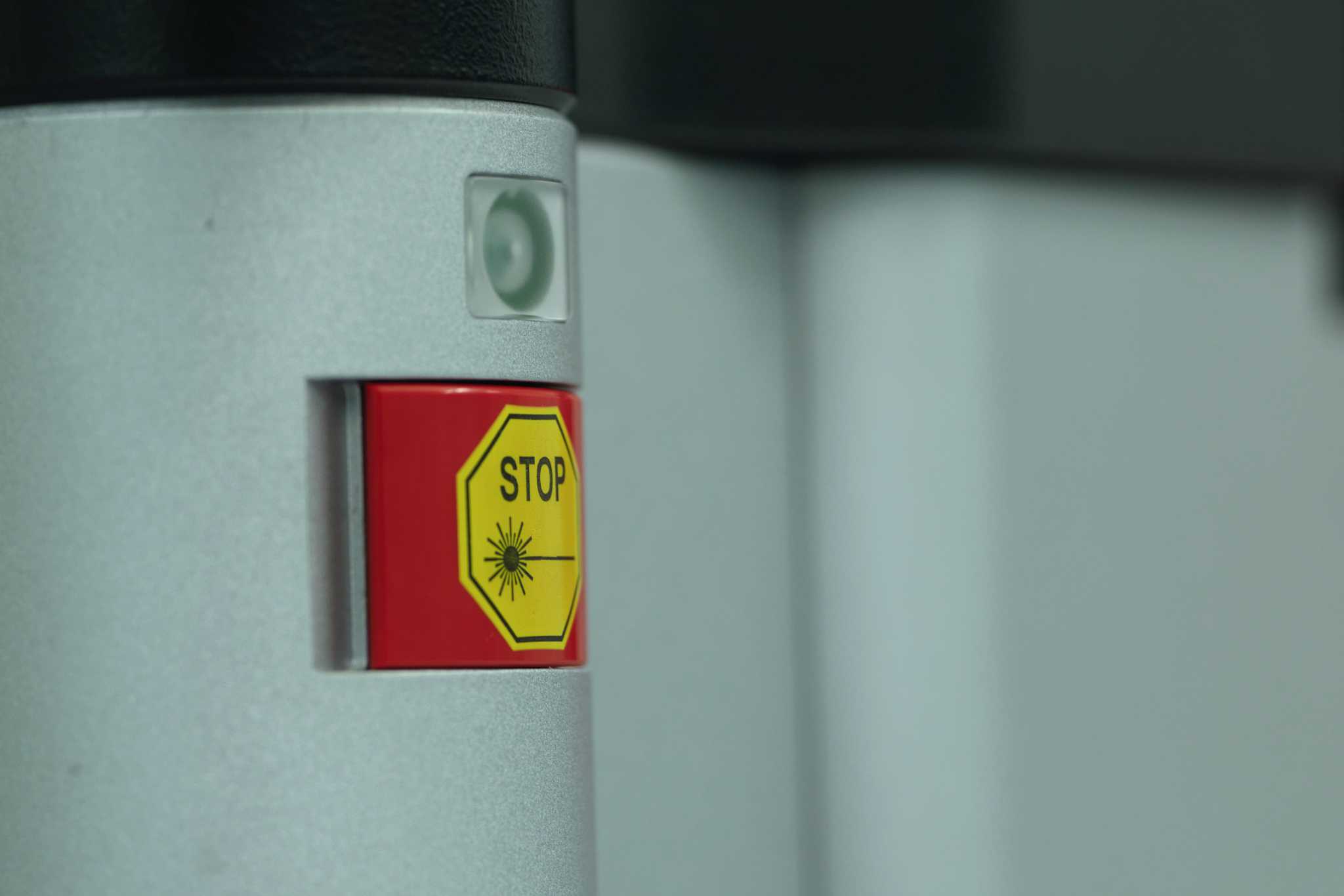
Laser - Procedure
Airway Fires Simulation
Use this resource in conjunction with your real-world training

Experience Summary
In this experience, observe the procedure of a 65 year old male undergoing a transoral laser resection of his right vocal cord squamous cell carcinoma, during which there is an airway fire.
Clinical Context
Laser-assisted and diathermy-based airway procedures are widely used in the management of airway pathology. While generally safe, these techniques carry a small but well-recognised risk of airway fire. This arises when the elements of the classic “fire triangle” are present: an oxidiser (typically oxygen-enriched gas mixtures), an ignition source (such as a laser beam or electrosurgical current), and a fuel (including airway secretions, blood, or moist mucosa).
Immediate Management Of Airway Fires
Airway fire is a time-critical emergency requiring coordinated, decisive action. The first priority is to stop the fire triangle: immediately discontinue the ignition source (laser or diathermy) and halt the flow of all airway gases, particularly oxygen and nitrous oxide. The endotracheal tube should be rapidly removed if present, as it may be a continuing fuel source. The airway should then be flooded with saline or water to extinguish residual flames and cool tissues. Ventilation must be re-established promptly, ideally with air until it is safe to reintroduce oxygen at the lowest effective concentration. Rigid or flexible bronchoscopy is recommended early to assess the extent of thermal injury, identify retained debris, and guide further management. Simultaneously, the patient should be assessed for hypoxia and potential carbon monoxide exposure, with arterial blood gas analysis and co-oximetry where available.
Longer-Term Management Of Airway Fires
Following initial stabilisation, ongoing care focuses on the recognition and treatment of airway injury and systemic complications. Patients require close monitoring, often in a high-dependency or intensive care setting, due to the risk of delayed airway oedema, sloughing of mucosa, and secondary obstruction. Repeat bronchoscopic evaluation may be necessary to clear debris and reassess injury progression. Supportive management includes humidified oxygen, careful airway toileting, and consideration of corticosteroids, although evidence for their routine use is limited. Broad-spectrum antibiotics are not routinely indicated unless there is clinical suspicion of infection. Long-term sequelae such as subglottic stenosis, vocal cord injury, or tracheal scarring should be anticipated, with early involvement of ENT and airway specialists to facilitate follow-up and rehabilitation.
Learning Outcomes
- Observe the management of an airway fire caused by laser use.
- Understand the risks associated with laser use.
- Understand the risk factors for a laser fire.
- Understand the immediate management of an airway fire.
External Resources