Monitor
ITU Bed-space OrientationUse this resource in conjunction with your real-world training

Experience Summary
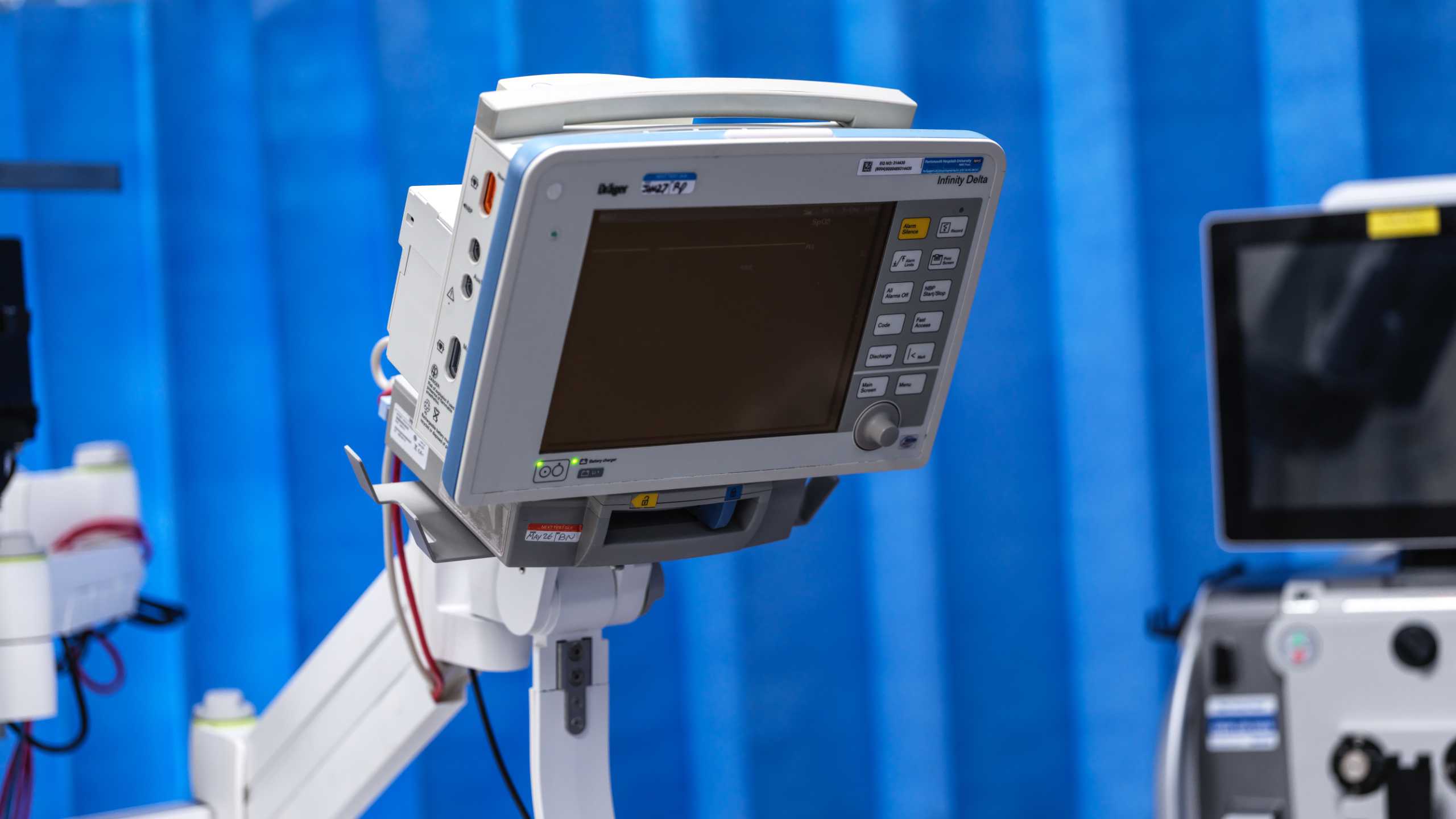
In this series, the equipment in an intensive treatment unit (ITU) bed space are identified, and their features explained. In this 360° video, watch as the functions of the monitor are shown.
Clinical Context
Being correctly familiarised with the equipment found in an ITU bed space is essential for delivering safe, effective, and timely patient care. The ITU environment is highly complex, with critically ill patients relying on advanced technology to support vital organ function. A thorough understanding of this equipment enables healthcare professionals to respond confidently and appropriately in both routine care and emergency situations. Each ITU bed space typically contains equipment such as ventilators, infusion pumps, cardiac monitors, renal replacement therapy machines, suction devices, and oxygen delivery systems. Familiarity with how these devices operate, their alarms, and their limitations helps reduce the risk of user error, which can have serious or even fatal consequences. For example, misprogramming an infusion pump or failing to recognise a ventilator alarm may lead to delayed intervention and patient harm. Correct familiarisation also supports rapid decision-making. ITU patients can deteriorate quickly, and staff must be able to interpret monitor readings, troubleshoot equipment issues, and initiate immediate actions without hesitation. When clinicians are confident with the equipment, they can focus more fully on clinical assessment and patient-centred care rather than struggling with unfamiliar technology. In addition, proper equipment knowledge promotes effective teamwork and communication. ITU care is multidisciplinary, and a shared understanding of equipment use ensures smoother handovers, clearer communication during emergencies, and coordinated responses during procedures such as intubation or cardiac arrest. Finally, being familiar with ITU equipment supports infection prevention and equipment longevity. Knowing correct cleaning procedures, safe handling, and appropriate storage reduces the risk of healthcare-associated infections and equipment damage.
Patient Monitor
A patient monitor is used in clinical settings to continuously observe and display a patient’s vital physiological parameters, supporting safe and effective monitoring. It typically measures heart rate, blood pressure (invasive and non-invasive), oxygen saturation, respiratory rate, and may also display ECG waveforms and temperature. The monitor provides real-time data and visual and audible alarms that alert staff to changes in a patient’s condition. This allows early recognition of deterioration, timely intervention, and informed clinical decision-making, particularly in high-dependency and intensive care environments.
Learning Outcomes
- Be able to correctly identify the patient monitor.
- Be able to correctly identify the different patient observations that feature on the patient monitor.
- Understand the specific functions of the patient monitor that make it suitable for use in ITU.
External Resources