
Lumbar Puncture
Acute Care Common Stem (ACCS) Simulation
Use this resource in conjunction with your real-world training

Experience Summary
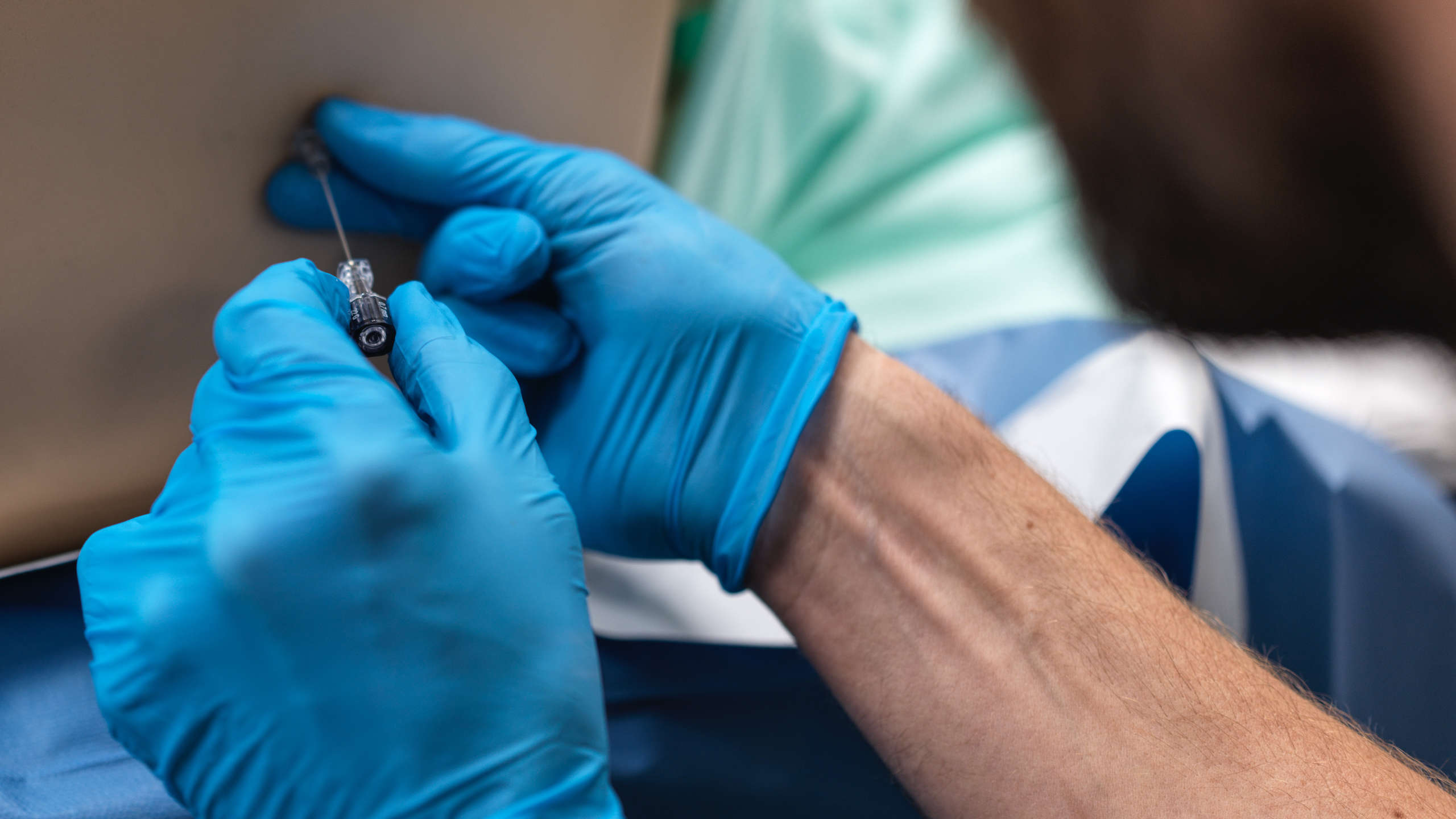
In this 360-degree video, observe the clinician perform a lumbar puncture in the context of a suspected subarachnoid haemorrhage.
Clinical Context
A lumbar puncture (LP), also known as a spinal tap, is a diagnostic and sometimes therapeutic procedure in which a needle is inserted into the subarachnoid space of the lumbar spine to access cerebrospinal fluid (CSF). It is commonly used to diagnose central nervous system (CNS) infections such as meningitis or encephalitis, subarachnoid hemorrhage (when CT is inconclusive, or negative for a bleed at 6 hours post-headache), inflammatory or demyelinating conditions like multiple sclerosis, and certain cancers involving the CNS. Therapeutically, it may be used to administer intrathecal medications (e.g., chemotherapy, antibiotics) or relieve pressure in conditions such as idiopathic intracranial hypertension.
Contraindications to LP include signs of raised intracranial pressure (e.g., papilledema, focal neurological deficits) without prior neuroimaging, local infection at the puncture site, and uncorrected coagulopathy.
Steps of Performing a Lumbar Puncture:
- Preparation and Consent:
- Explain the procedure, including risks such as headache, bleeding, infection, or nerve irritation.
- Obtain informed consent.
- Review relevant blood tests (e.g., platelets, INR) and imaging (CT head if indicated) to rule out contraindications.
- Equipment Gathering:
- Sterile LP kit (including spinal needles, manometer, collection tubes), antiseptic solution, sterile gloves, local anaesthetic (e.g., lidocaine), sterile drapes, and a dressing.
- Patient Positioning:
- Position the patient in the left lateral decubitus position with knees drawn to the chest and chin tucked, or sitting with the spine flexed forward.
- Ensure the back is aligned and accessible.
- Site Identification and Aseptic Technique:
- Identify the puncture site—typically between the L3/L4 or L4/L5 interspaces (iliac crests align with L4).
- Clean the area with antiseptic and apply sterile drapes.
- Infiltrate skin and deeper tissues with local anaesthetic.
- Needle Insertion:
- Insert the spinal needle with stylet in the midline, aiming slightly cephalad.
- Advance slowly until a "pop" is felt as the dura is pierced.
- Remove the stylet to check for CSF flow.
- CSF Collection and Pressure Measurement:
- Attach a manometer to measure opening pressure (if in lateral position).
- Collect CSF in sterile tubes (typically 3–4 tubes) for laboratory analysis.
- Post-Procedure Care:
- Apply dressing and monitor for complications (e.g., post-LP headache).
- Advise the patient to lie flat for a short period.
Learning Outcomes
- Observe the procedure of performing a lumbar puncture.
- Understand the steps of performing a lumbar puncture.
- Understand the equipment required to perform a lumbar puncture.
- Understand the key safety points in performing a lumbar puncture.
External Resources