
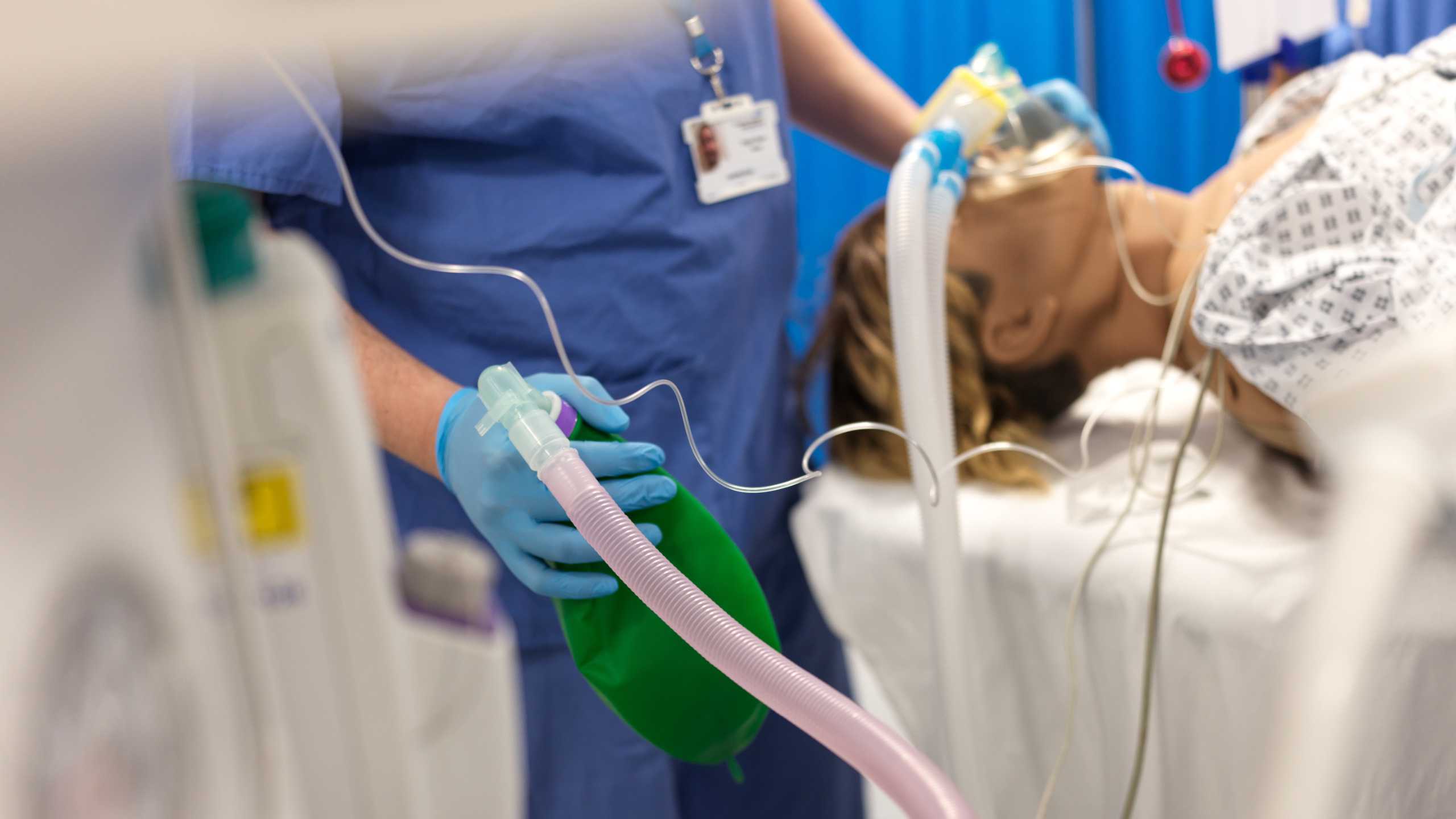
High Central Neuraxial Block
Anaesthetic Critical Incidents Simulation
Use this resource in conjunction with your real-world training

Experience Summary
In this experience, observe the management of a patient with a high central neuraxial block.
Clinical Context
High central neuraxial block is a serious complication of spinal or epidural anaesthesia, in which excessive spread of local anaesthetic within the neuraxis leads to blockade of higher spinal segments than intended. It may occur following an excessively large intrathecal dose, unrecognised intrathecal placement of an epidural catheter, or rapid administration of epidural top-ups. It is most commonly encountered in obstetric anaesthesia but may arise in any neuraxial technique.
Signs of High Central Neuraxial Block
Clinically, the condition results from progressive blockade of sympathetic, sensory, and motor fibres. Early features include hypotension due to sympathetic blockade and reduced systemic vascular resistance, often accompanied by bradycardia from blockade of the cardiac accelerator fibres (T1–T4). Patients may complain of upper limb weakness, tingling, or difficulty breathing as the block ascends. As the level reaches the cervical segments, diaphragmatic function (phrenic nerve, C3–C5) may be compromised, leading to respiratory insufficiency or apnoea. Patients may also report a sense of impending doom, anxiety, or inability to speak. In severe cases, loss of consciousness and cardiovascular collapse can occur. Recognition requires vigilance and frequent assessment of block height following neuraxial anaesthesia. A rapidly rising sensory level, especially above T4, should raise concern. Monitoring of vital signs is essential, as hypotension and bradycardia may be early indicators before overt respiratory compromise develops.
Management of High Central Neuraxial Block
Management is a medical emergency and should follow an ABC approach. Immediate actions include calling for help and stopping any ongoing neuraxial drug administration. The airway must be assessed promptly; high-flow oxygen should be administered, and early tracheal intubation may be required if there is evidence of respiratory compromise or reduced consciousness. Ventilatory support should not be delayed. Circulatory support is critical. Hypotension should be treated aggressively with intravenous fluids and vasopressors such as phenylephrine or ephedrine. Bradycardia may require atropine, and in severe cases, adrenaline may be needed. Left uterine displacement should be maintained in pregnant patients to reduce aortocaval compression. If cardiac arrest occurs, standard advanced life support protocols should be followed, with modifications for pregnancy where applicable. Continuous monitoring, including ECG, blood pressure, and oxygen saturation, is essential throughout. Reassurance should be provided if the patient is conscious, as the experience can be distressing. Sedation may be required once the airway is secured. As the effects of the local anaesthetic gradually wear off, supportive care is continued. Post-event, the patient should be monitored in a high-dependency or critical care setting until full recovery. Documentation, incident reporting, and review of technique are important to prevent recurrence. In summary, high neuraxial block requires early recognition, prompt airway and cardiovascular support, and coordinated multidisciplinary management to prevent morbidity and mortality.
Learning Outcomes
- Observe the management of a patient with a high central neuraxial block.
- Understand the clinical features of a high central neuraxial block.
- Understand the management of a high central neuraxial block.
External Resources