
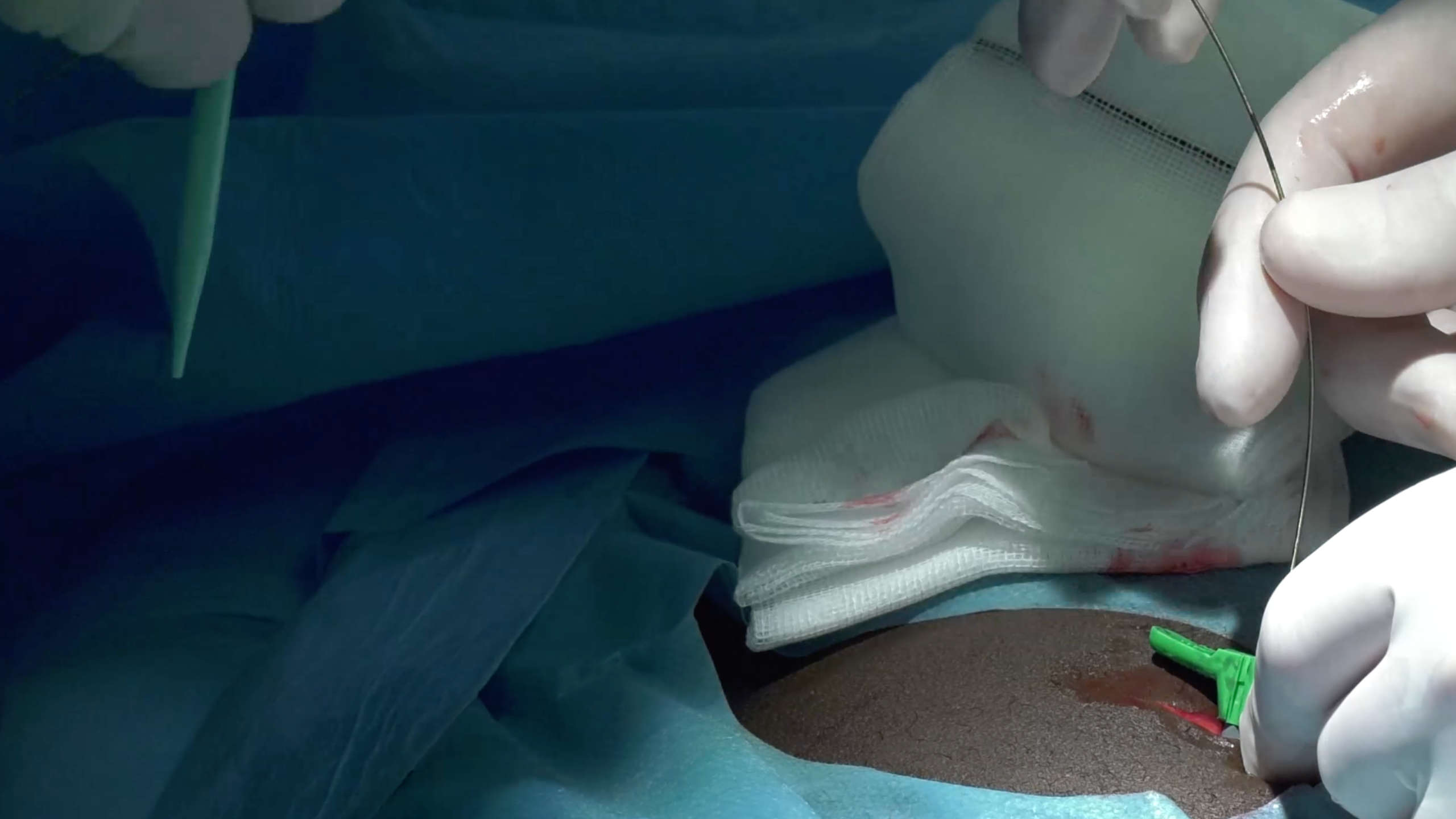
Dilator Insertion
Peritoneal Catheter Placement ExR Labs
 Real World Medical
 Use this resource in conjunction with your real-world training

Experience Summary
In this series of resources, watch 360-degree videos detailing the steps and key safety steps in inserting a peritoneal catheter. In this video, watch the clinicians insert the dilator to allow the progression of the catheter using a Seldinger technique.
Clinical Context
Peritoneal catheters are most commonly inserted for patients requiring peritoneal dialysis, either as long-term renal replacement therapy or as a bridge to kidney transplantation. They are also occasionally used for chronic peritoneal drainage in cases of malignant or refractory ascites. Insertion of the catheter allows dialysate to be instilled and drained from the peritoneal cavity, enabling solute clearance and ultrafiltration across the peritoneal membrane. This procedure is typically considered when patients have progressive chronic kidney disease reaching end-stage renal failure, when vascular access for hemodialysis is limited, or when patient preference and lifestyle factors make peritoneal dialysis a suitable option. Because the catheter is intended for prolonged use, meticulous technique is critical to minimise complications such as peritonitis, leakage, or catheter malfunction.
Key Safety Steps
Safe insertion of a peritoneal catheter requires a structured approach to reduce both immediate and long-term risks. Pre-procedure preparation begins with careful patient assessment, including review of comorbidities, bleeding risk, and abdominal history (such as prior surgery, hernias, or infections) that may affect placement. Imaging may be indicated if there are concerns about intra-abdominal adhesions. Prophylactic antibiotics are administered according to institutional protocols to reduce the risk of peritonitis.
The procedure is performed under sterile conditions, often with local anesthesia and conscious sedation. Strict aseptic technique is essential throughout, including surgical hand preparation, sterile draping, and use of full barrier precautions. The catheter is typically placed either via a surgical mini-laparotomy, laparoscopic technique, or percutaneous approach under imaging guidance. In all methods, care must be taken to avoid injury to abdominal organs or vessels. Placement of the catheter tip into the true pelvis helps ensure effective drainage and reduces the risk of malfunction.
Key safety steps during insertion include:
- Maintaining sterile technique to prevent contamination.
- Careful dissection to avoid visceral injury.
- Confirming proper intraperitoneal position of the catheter, often by flushing with sterile saline or dialysate.
- Securing the catheter with subcutaneous tunneling to reduce infection risk and prevent leaks.
- Ensuring haemostasis and checking for immediate complications such as bleeding or bowel perforation.
Post-procedure, the catheter exit site should be dressed with sterile technique, and patients are monitored for pain, bleeding, or signs of infection. Training in exit-site care and gradual initiation of dialysis (often using low-volume exchanges initially) are important to allow proper healing and minimise leakage.
Learning Outcomes
- Observe the procedural steps of the insertion of a peritoneal catheter using a mini laparotomy approach under ultrasound guidance.
- Understand the key safety steps in this procedure.
- Understand the anatomy relevant to this procedure.
External Resources