
Use this resource in conjunction with your real-world training

Experience Summary
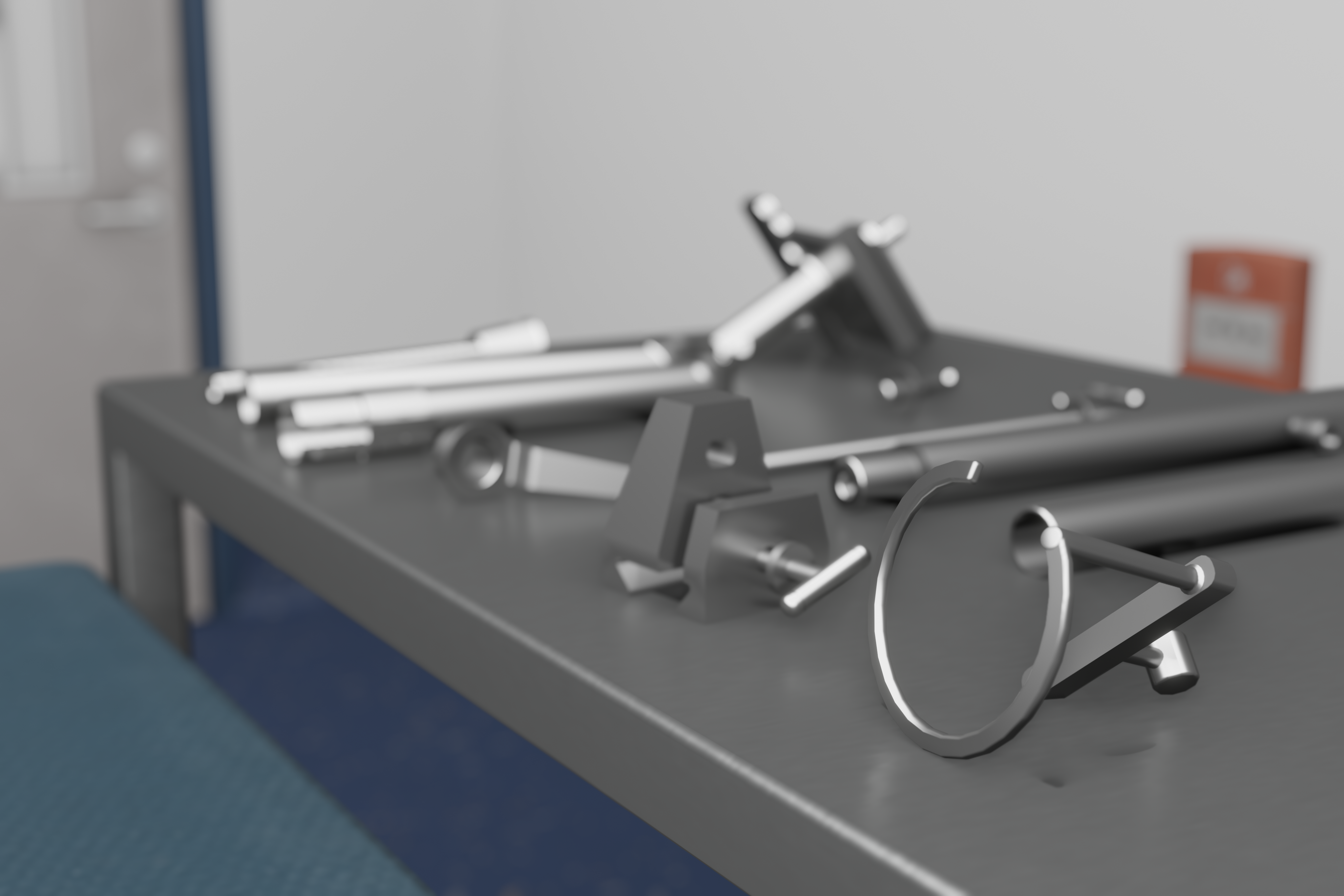
In this experience, complete the steps to assemble the retractor for abdominal insufflation-less surgery system.
Clinical Context
A retractor for abdominal insufflation-less surgery (RAIS) is a specialised surgical instrument designed to provide access and visibility during abdominal procedures without the use of carbon dioxide (CO₂) insufflation. Unlike traditional laparoscopy, where the peritoneal cavity is inflated to create a working space, insufflation-less (gasless) surgery relies on mechanical lifting and retraction of the abdominal wall to expose the operative field. This technique is especially useful in resource-limited settings or in patients for whom insufflation poses risks.
Clinical Context
Insufflation-less surgery is primarily used in:
- Low-resource or rural environments where laparoscopic insufflation equipment or CO₂ supply is unavailable.
- Patients with cardiopulmonary compromise, such as those with chronic obstructive pulmonary disease (COPD) or poor cardiac function, who may not tolerate pneumoperitoneum well.
- Gynecologic, general, and certain oncologic surgeries, including tubal ligations, hysterectomies, appendectomies, and myomectomies.
The technique is also favored in field hospitals, disaster zones, and military medical units, where mobility, simplicity, and safety are paramount.
1. Preparation
Before setup:
- Confirm the availability of all components of the RAIS system: lifting arm, suspension frame or rod, retractor blades/hooks, clamps, and any height-adjustable attachments.
- Ensure the operating table is compatible with the mounting mechanism or that a portable frame is available.
- Perform a sterility check—some parts will remain sterile (intra-abdominal blades), while others (external frame) may be non-sterile but covered appropriately.
2. Patient Positioning
- Place the patient in a supine or low lithotomy position depending on the type of procedure.
- Ensure adequate padding and secure the patient to the table if table tilt is to be used.
- Prep and drape the surgical field in standard sterile fashion.
3. Incision and Initial Access
- Make a small infraumbilical or periumbilical incision (typically 2–3 cm).
- Use blunt dissection to access the anterior fascia or peritoneum, depending on the technique.
4. RAIS System Assembly
- Secure the lifting frame: Attach the RAIS suspension arm to the side rail of the operating table using its clamp mechanism or set up a free-standing frame near the head or side of the patient.
- Adjust the height and position of the arm so that it can lift vertically or slightly obliquely, depending on surgical preference.
- Attach the retraction hook or blade to the abdominal wall fascia or subcutaneous layer using sutures or a clamp, ensuring firm grip but avoiding excessive tension or trauma.
- Connect the hook to the lifting mechanism (usually a rod or pulley system) and begin gentle, controlled elevation of the abdominal wall.
5. Fine-Tuning and Verification
- Elevate until a sufficient working space is created (typically 3–5 cm clearance).
- Ensure there is no undue tension, skin blanching, or respiratory restriction.
- Confirm adequate exposure with lighting and instruments before beginning the operative procedure.
Advantages
- No need for CO₂, reducing complexity and cost.
- Improved safety in patients with respiratory or cardiovascular instability.
- Environmentally sustainable due to reduced resource dependency.
- Simplified logistics in austere or mobile medical settings.
Learning Outcomes
- Practice assembling the RAIS system.
- Understand the important components of the RAIS system.
- Identify the individual pieces of equipment in the RAIS system.
External Resources