
Arterial Line Placement
Anaesthetic Critical Incidents Simulation
Use this resource in conjunction with your real-world training

Experience Summary
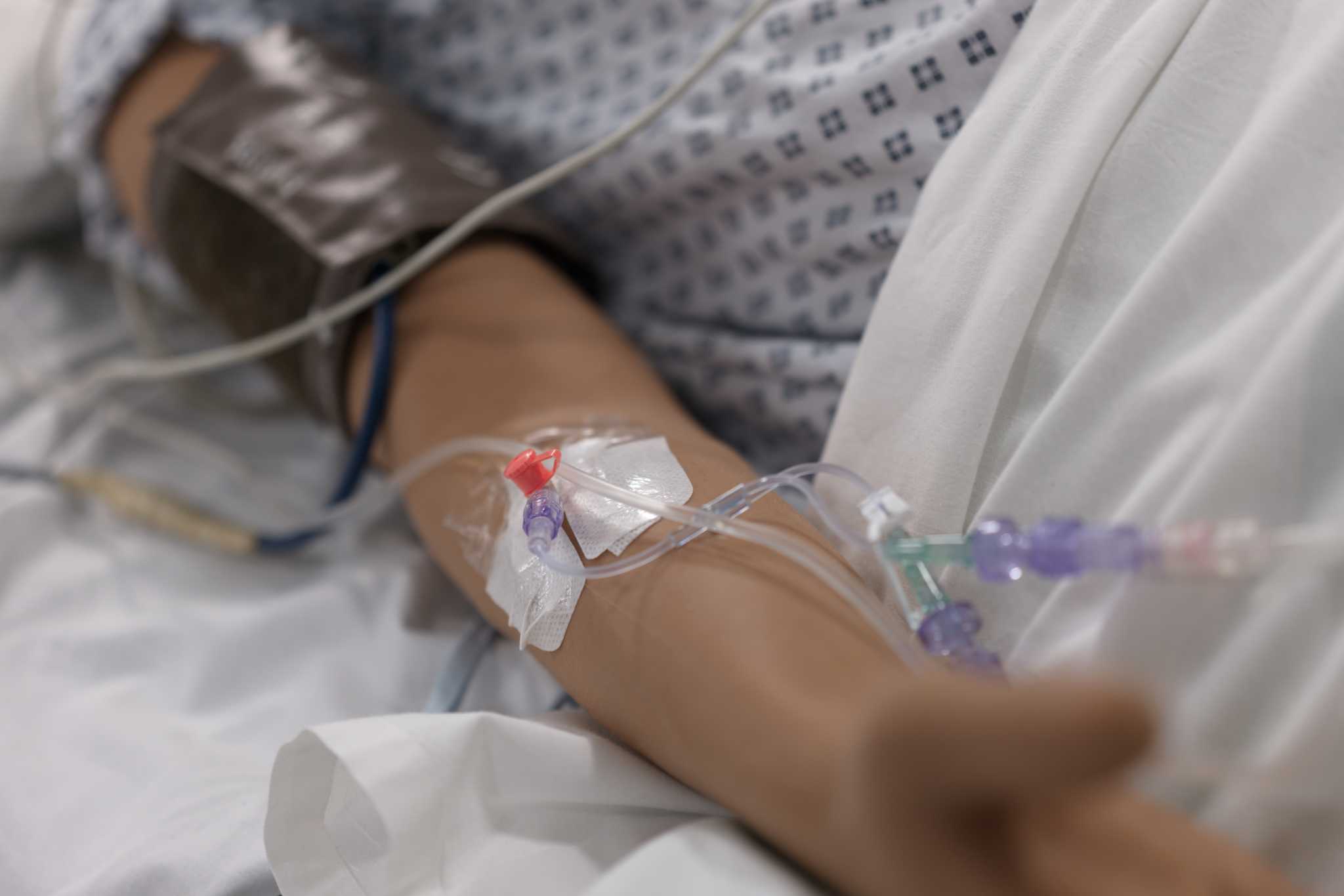
In this experience, observe an arterial line insertion on a simulated patient.
Clinical Context
Arterial line insertion is a commonly performed procedure in anaesthetic and critical care practice, allowing continuous blood pressure monitoring and frequent arterial blood sampling. It is particularly useful in haemodynamically unstable patients or those undergoing major surgery where beat-to-beat monitoring is required. The clinical context includes patients receiving vasoactive drugs, those with significant cardiovascular disease, major trauma, or undergoing high-risk procedures such as cardiac, vascular, or neurosurgery. Arterial lines are also indicated when repeated arterial blood gas analysis is anticipated, for example in respiratory failure or complex metabolic disturbances. The most common site is the radial artery due to its superficial location and collateral circulation via the ulnar artery. Alternative sites include the femoral, brachial, and dorsalis pedis arteries.
Procedural Steps of CVC Insertion
Preparation involves appropriate monitoring (ECG, pulse oximetry, non-invasive blood pressure) and strict aseptic technique. The site should be cleaned with an appropriate antiseptic solution, and sterile gloves and drapes used. Local anaesthetic is infiltrated to minimise discomfort. Assessment of collateral circulation (e.g. modified Allen’s test) may be considered prior to radial artery cannulation, although its routine use is debated. The procedure is typically performed using either a direct cannulation technique or the Seldinger technique. Increasingly, ultrasound guidance is used to improve first-pass success, particularly in patients with difficult anatomy or weak pulses. The artery is identified by its pulsatility and non-compressibility on ultrasound. In the direct technique, the cannula is advanced at a shallow angle until a flash of pulsatile arterial blood is seen. The catheter is then advanced into the lumen while the needle is withdrawn. In the Seldinger technique, a needle is first inserted into the artery, a guidewire is passed through it, and the catheter is then advanced over the wire. Once inserted, the line is connected to a pressurised transducer system, flushed, and zeroed at the level of the heart (phlebostatic axis) to ensure accurate readings. A characteristic arterial waveform confirms correct placement. The line is then secured and covered with a sterile dressing.
Complications of CVC Insertion
Complications include bleeding, haematoma, arterial spasm, thrombosis, distal ischaemia, infection, and, rarely, nerve injury. Regular monitoring of the limb for perfusion is essential.
Learning Outcomes
- Observe the procedure of arterial line insertion on a simulated patient.
- Understand the procedural steps of arterial line insertion.
- Understand the relevant anatomy to arterial line insertion.
- Understand the potential complications of arterial line insertion.
External Resources