
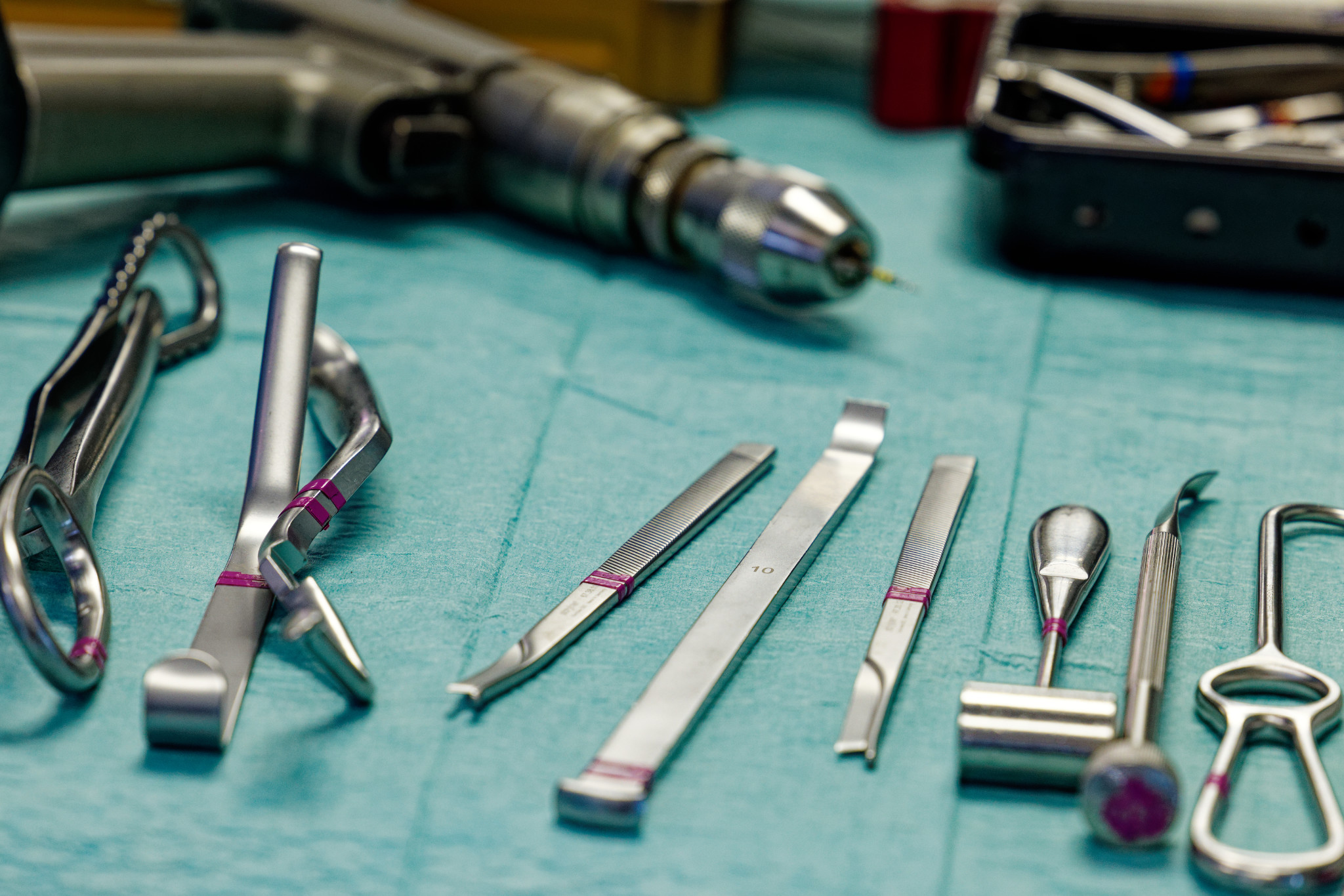
Total Knee Replacement - Trialing, Cementing and Implantation
Knee Replacement Real World Medical
 Use this resource in conjunction with your real-world training

Experience Summary
This experience guides you through the trialing, cementing and implantation towards the latter part of total knee replacement surgery.
Clinical Context
Total knee replacement (TKR), also known as total knee arthroplasty, is a common orthopaedic procedure performed to relieve pain and restore function in patients with severe knee joint degeneration. The most frequent indication is advanced osteoarthritis, but it may also be performed for inflammatory arthritis (e.g. rheumatoid arthritis), post-traumatic arthritis, or severe knee deformities. TKR is typically considered when conservative treatments such as physiotherapy, medications, and joint injections have failed to provide adequate relief.
The knee joint is a complex hinge joint composed of the femur, tibia, and patella. In conditions such as osteoarthritis, progressive cartilage loss leads to joint space narrowing, pain, stiffness, and reduced mobility. TKR aims to replace the damaged joint surfaces with artificial components, restoring alignment and function while reducing pain. The procedure is particularly common in older adults, but may also be considered in younger patients with debilitating symptoms.
Patients undergo thorough pre-operative assessment including imaging (usually X-rays), functional evaluation, and optimisation of comorbidities (e.g. diabetes, cardiovascular disease). Patient education, physiotherapy prehabilitation, and planning for post-operative rehabilitation are essential for optimal outcomes.
Procedure
Total knee replacement is typically performed under spinal or general anaesthesia in a sterile surgical theatre and takes approximately 1.5 to 2 hours.
- Incision and exposure: A midline skin incision is made over the knee, followed by medial parapatellar arthrotomy to access the joint.
- Bone preparation: The diseased articular surfaces of the femur and tibia are removed using precision cutting guides. The underside of the patella may also be resurfaced.
- Component placement: Trial prosthetic components are inserted to ensure correct alignment, sizing, and joint stability. Once confirmed, the final metal femoral and tibial components, along with a polyethylene spacer, are cemented or press-fitted into place.
- Closure: The wound is irrigated, haemostasis achieved, and layers closed in anatomical order. A sterile dressing is applied, and postoperative analgesia is initiated.
Learning Outcomes
- Observe the steps of the total knee replacement surgery.
- Understand the principles of aseptic technique and its importance in the operating theatre.
- Answer the questions to understand more about the procedure of a total knee replacement.
External Resources