
Evidence-based Decision Making
Professionalism Simulation
Use this resource in conjunction with your real-world training

Synopsis
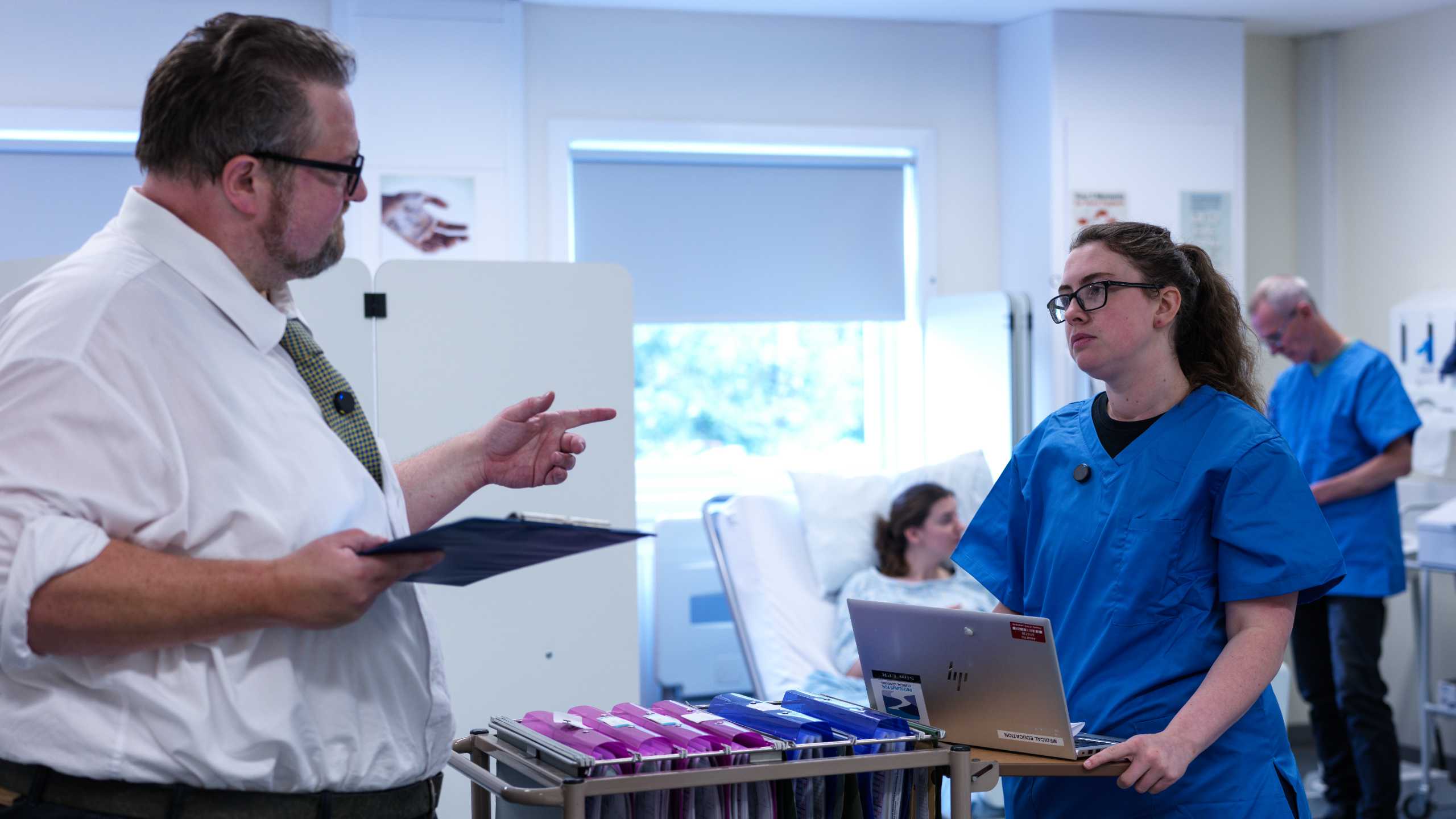
In this clip, a resident doctor joins a senior clinician on a ward round to review a patient who developed an allergic reaction after receiving antibiotics for presumed bacterial meningitis. A lumbar puncture has now revealed findings consistent with viral meningitis, indicating that the antibiotics could be stopped. The resident questions why the antibiotics were started before the lumbar puncture was performed.
As you watch, pay particular attention to:
- The clinical reasoning – the resident’s rationale for delaying antibiotics until after the lumbar puncture and the senior clinician’s response.
- Communication style – how the resident frames the query, whether it’s presented as a concern, a suggestion, or a challenge, and how the senior clinician addresses it.
- Decision‑making process – any discussion of risks (e.g., allergic reaction), benefits, and the balance between empirical treatment and awaiting definitive diagnostics.
Clinical Importance of Evidence-based Approaches
Evidence-based medicine (EBM) underpins clinical practice by ensuring medical decisions are informed by the best available research, combined with clinical expertise and patient values. This approach helps to improve effectiveness, safety, and efficiency in patient care. It also reduces unwarranted variation in practice, minimises harm, and ensures that treatments provide more benefit than risk. Clinicians using EBM are better able to select therapies that have strong evidence of efficacy, avoid outdated or disproven interventions, and respond to emerging data — for example, from systematic reviews and s controlled trials. This is especially important given how fast medical knowledge evolves: without attention to current evidence, treatments may lag behind new discoveries, or worse, perpetuate practices that are less effective or even harmful. On the system level, adopting evidence-based approaches helps allocate scarce resources wisely, avoid waste, and deliver better value in healthcare. It also supports development of clinical guidelines and protocols which can standardise high-quality care, support audit and continuous improvement, and enhance patient safety.
Discussion Points
- Risks of performing procedures out-of-hours unnecessarily
- How we explain empirical treatments to patients
- How we prioritise clinical decision making and differential diagnosis
- Dealing with clinical uncertainty
- Importance of evidence based decision making, including balance of risk vs. benefit
External Resources