
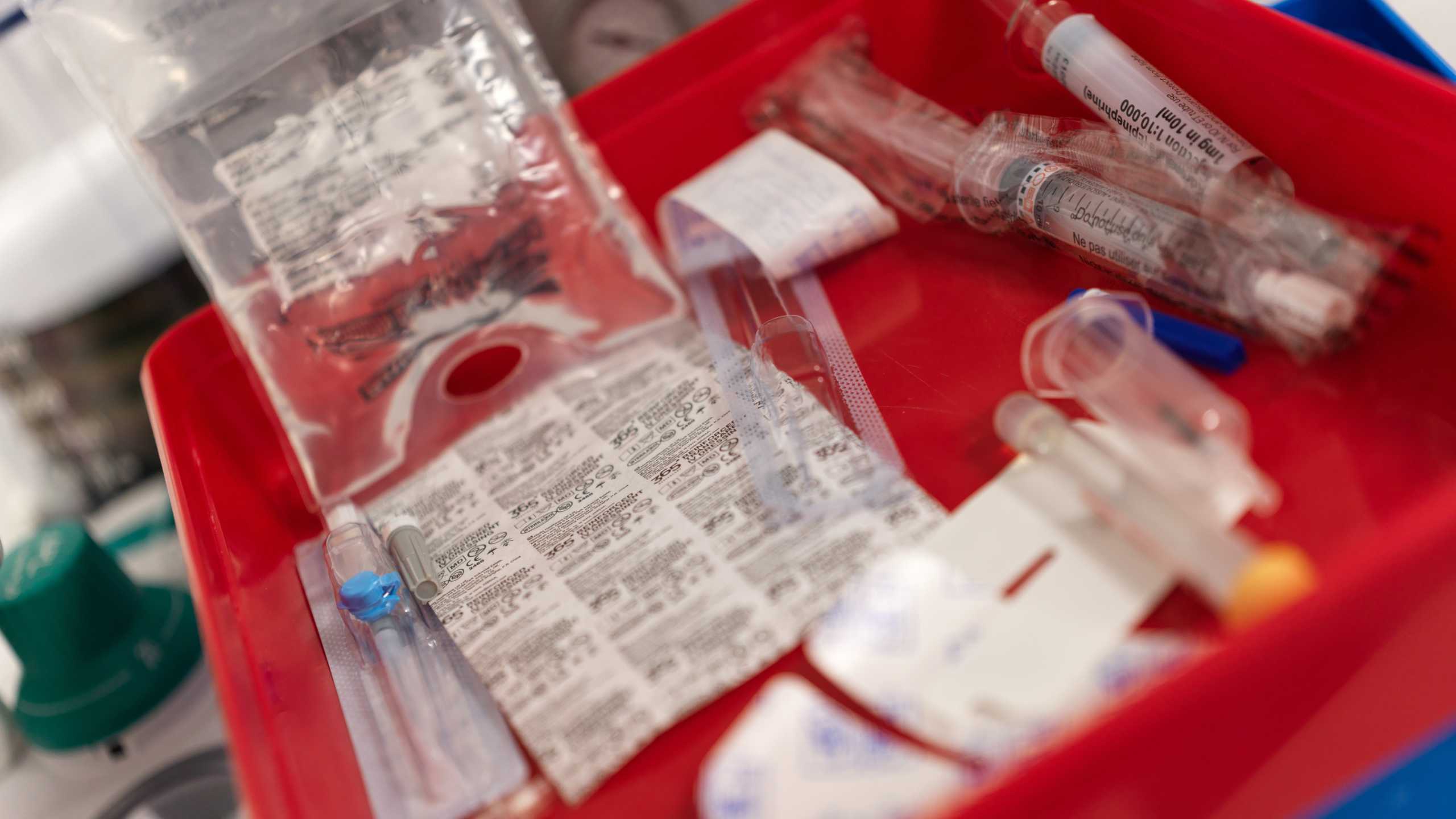
Anaphylaxis
Anaesthetic Critical Incidents Simulation
Use this resource in conjunction with your real-world training

Experience Summary
In this experience, observe as the anaesthetic team manage an intubated patient who has anaphylaxis to an intra-operative antibiotic.
Clinical Context
Anaphylaxis is a severe, life-threatening hypersensitivity reaction that can occur rapidly following exposure to triggering agents such as antibiotics, neuromuscular blockers, or latex. In the anaesthetic setting, it often occurs shortly after induction, when multiple potential allergens have been administered. In an intubated patient, the diagnosis can be challenging, as cutaneous signs may be obscured and the patient is unable to report symptoms.
Signs of Anaphylaxis
Recognition relies on identifying a constellation of cardiovascular, respiratory, and cutaneous features. The most common early sign is sudden hypotension due to profound vasodilation and increased vascular permeability. This may be accompanied by tachycardia and, in severe cases, cardiovascular collapse. Respiratory signs include increased airway pressures, difficulty ventilating, and a rising end-tidal CO₂, often due to bronchospasm. Wheeze may be audible on auscultation. Capnography may show a sloping expiratory trace. Cutaneous features such as urticaria, flushing, or angioedema may be present but are not always visible in the draped or anaesthetised patient. Differential diagnoses include haemorrhage, pulmonary embolism, and equipment-related issues.
Management of Anaphylaxis
Management must be immediate and systematic. The first step is to stop administration of all potential triggering agents and call for help. High-flow 100% oxygen should be administered, and the airway and ventilation optimised. The anaesthetist should switch to manual ventilation to better assess lung compliance and exclude mechanical causes of high airway pressures. The cornerstone of treatment is prompt administration of adrenaline. In an intubated patient with intravenous access, small boluses (e.g. 10–50 micrograms) may be titrated according to severity, with escalation to larger doses or infusion if cardiovascular instability persists. Intramuscular adrenaline may also be administered. Adrenaline acts via alpha- and beta-adrenergic effects to restore vascular tone, improve cardiac output, and relieve bronchospasm. Aggressive fluid resuscitation is essential, as significant intravascular volume depletion occurs due to capillary leak. Intravenous crystalloids should be administered rapidly. Additional therapies include antihistamines (e.g. chlorphenamine) and corticosteroids (e.g. hydrocortisone), although these have a delayed onset and are adjuncts rather than first-line treatments. Bronchospasm may require treatment with inhaled beta-agonists such as salbutamol. Continuous monitoring is essential, including ECG, invasive blood pressure if available, oxygen saturation, and capnography. Blood samples for mast cell tryptase should be taken at appropriate intervals to support diagnosis. Following stabilisation, the patient should be transferred to a critical care setting for ongoing monitoring, as biphasic reactions can occur. Documentation of the event, referral for specialist allergy testing, and clear communication with the patient regarding future anaesthetic risks are essential.
Learning Outcomes
- Observe the management of intra-operative anaphylaxis.
- Understand the signs of intra-operative anaphylaxis.
- Understand the management steps in anaphylaxis.
External Resources